1. Southern plantations grew more cotton
Faster cleaning made cotton more profitable. Before the Civil War, plantation owners planted more acres and forced more enslaved people to plant, tend, and pick cotton.
The World’s Fair · U.S. History
Turn the crank. Watch the seeds drop!
Step inside Eli Whitney’s cotton gin exhibit to see how one machine changed the way cotton reached American factories.
Enter the exhibit ↓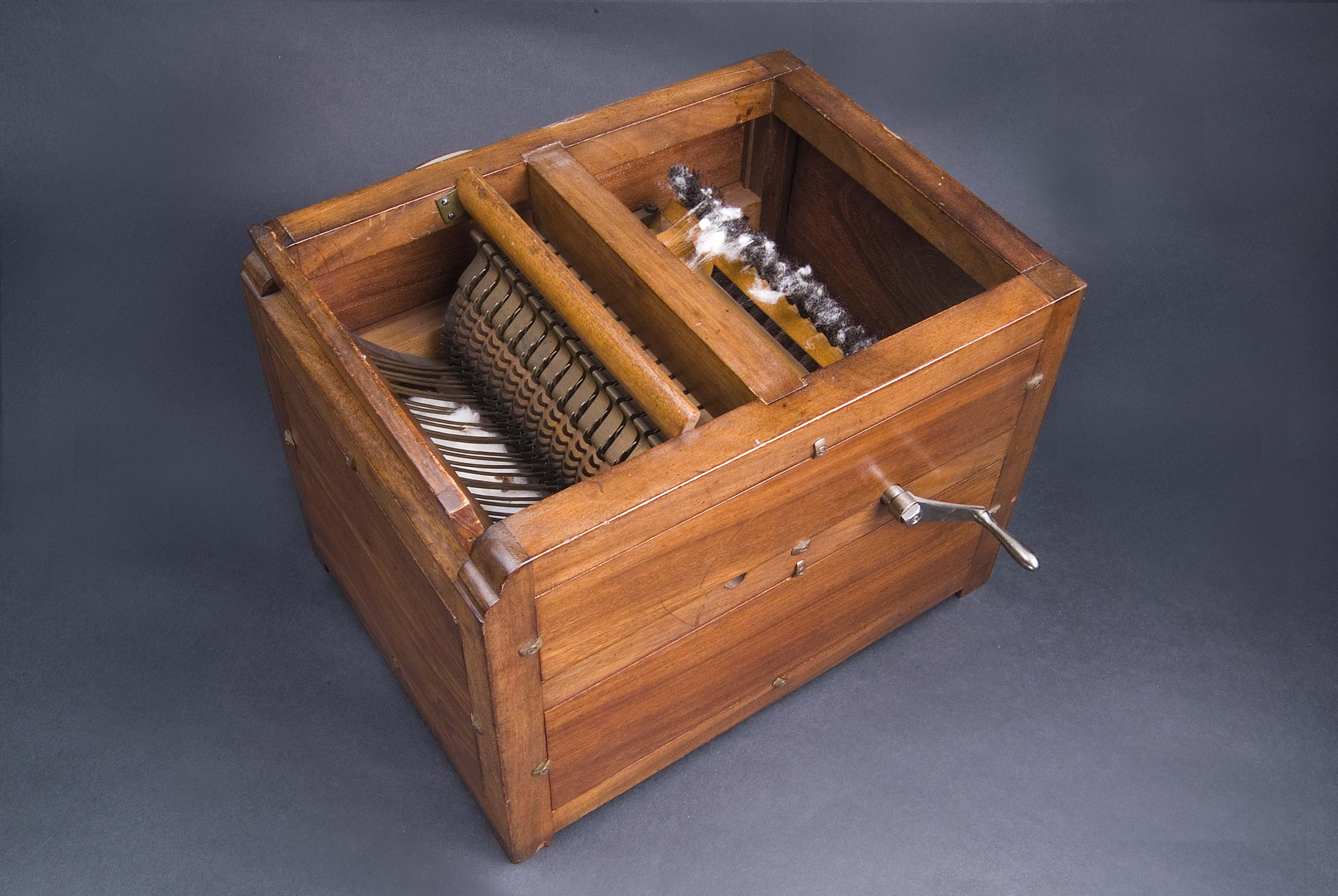
Display 01 · Introduce the inventor
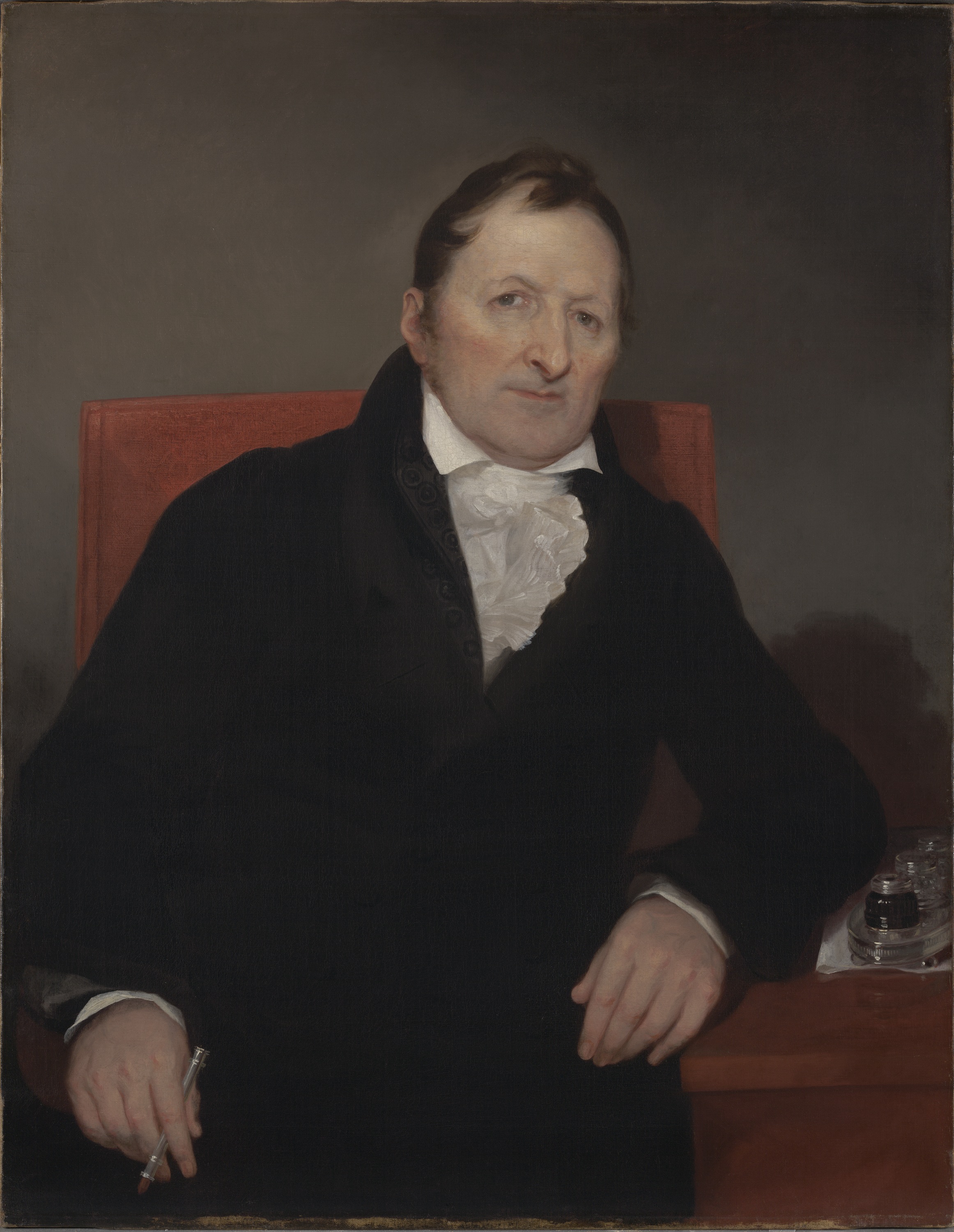
Eli Whitney developed his cotton gin in Georgia in 1793. He received a patent for it in 1794.
Display 02 · Show the problem
The seeds of short-staple cotton stuck tightly to the fluffy fibers. Those seeds had to come out before the cotton could be spun into thread.
Workers picked the seeds out by hand. This took hours of careful, repetitive work. On Southern plantations, enslaved people were forced to do much of this labor.

Display 03 · Demonstrate the invention
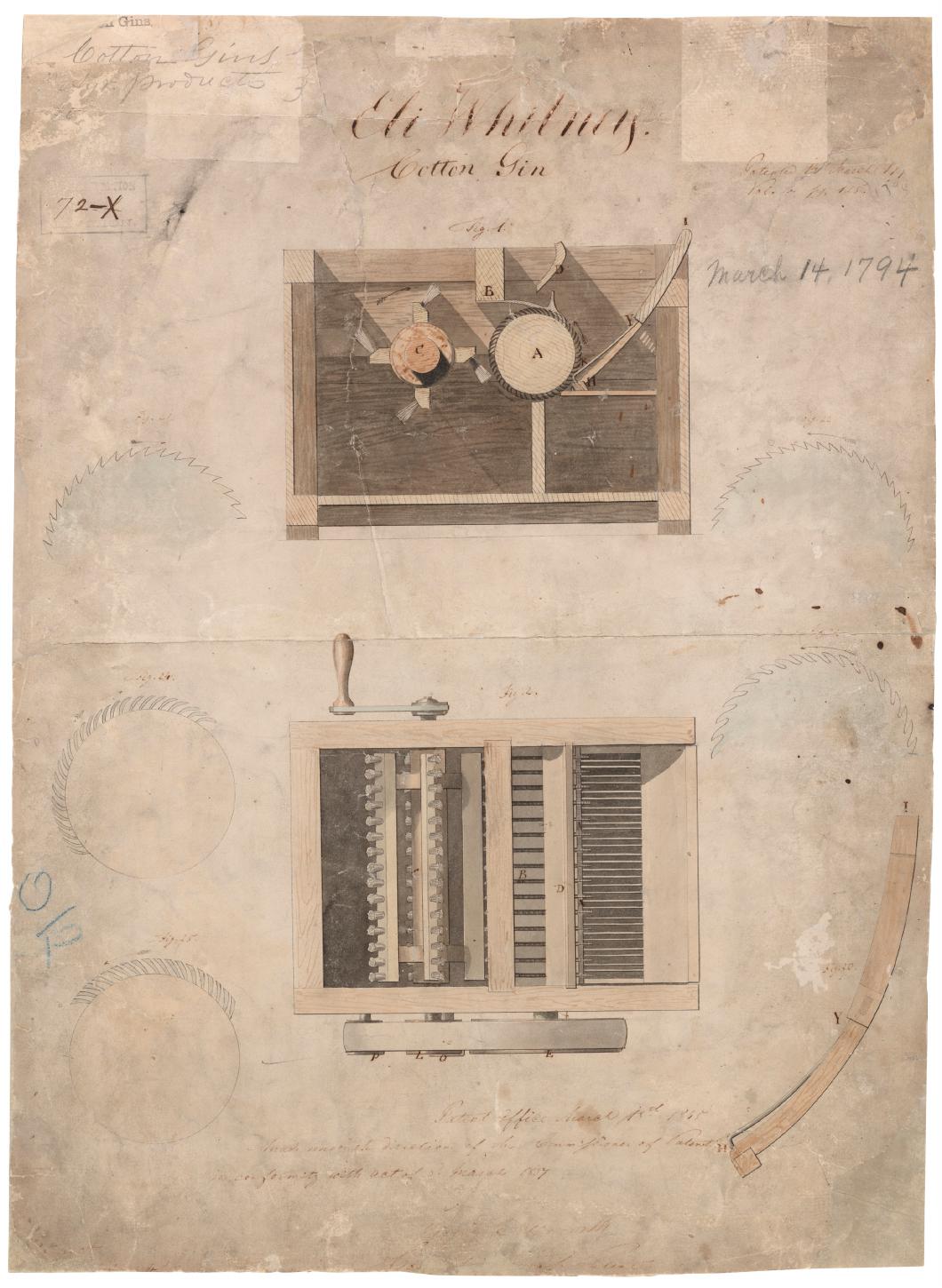
The cotton gin quickly separated seeds from cotton fibers. The word gin is short for engine.
Display 04 · Show its impact
The gin made seed removal faster. One machine could clean up to 50 pounds of cotton in a day, according to the National Archives.
Whitney invented the gin decades before the Second Industrial Revolution. The cotton industry it helped build continued to supply textile factories during that later period.
Faster cleaning made cotton more profitable. Before the Civil War, plantation owners planted more acres and forced more enslaved people to plant, tend, and pick cotton.
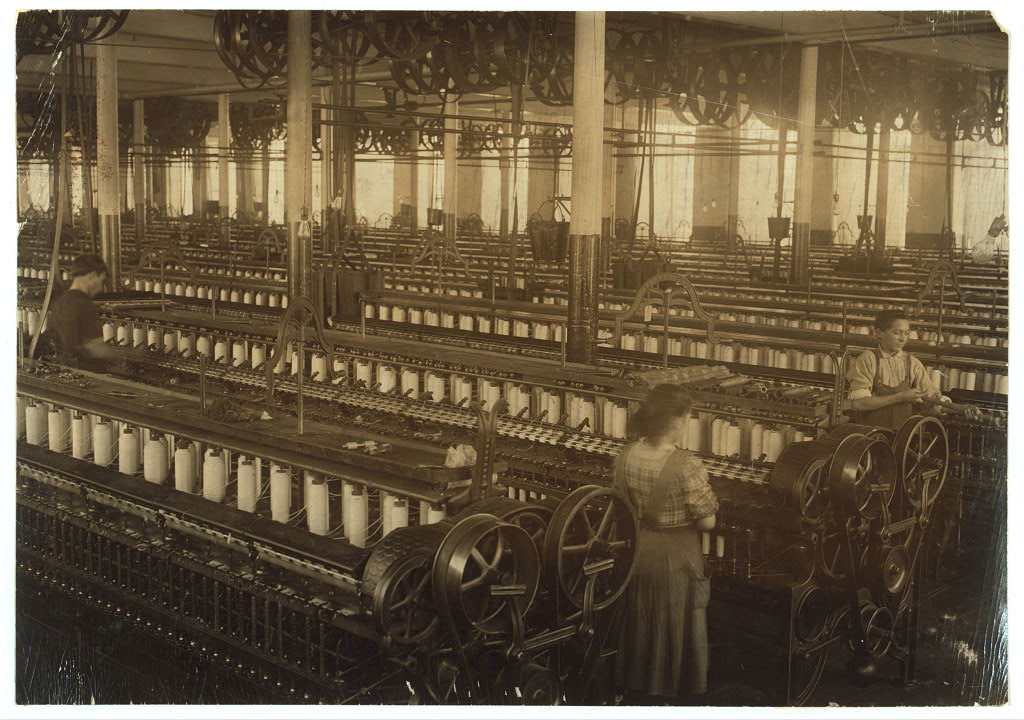
Cleaned cotton could be shipped to factories and spun into thread. In the 1870s, Fall River, Massachusetts, added mills that turned cotton into cloth on a large scale.
Display 05 · Convince your visitors
Our invention deserves attention at the World’s Fair because a simple hand crank made it possible to clean cotton much faster. Watch how the teeth pull the fibers through while the seeds stay behind. This small change helped supply mills with cotton to turn into cloth. It also made cotton more profitable for Southern plantation owners, who expanded their use of enslaved labor.